
Every clinic generates data all day long: appointments, invoices, prescriptions, inventory movements. The problem is that this data usually sits in reports nobody has time to open. Clinova was built around a different idea — your clinic's data should talk to you, in plain language, before problems happen.
Ask Nexa anything about your clinic
Nexa, the built-in AI assistant, works like a colleague who has read every record in your clinic. Ask it questions the way you would ask a person: "How many new patients did we see this month?", "Which doctor had the most cancellations last week?", or "What did we spend on dental supplies in June?" — and get an answer in seconds, backed by your real numbers.
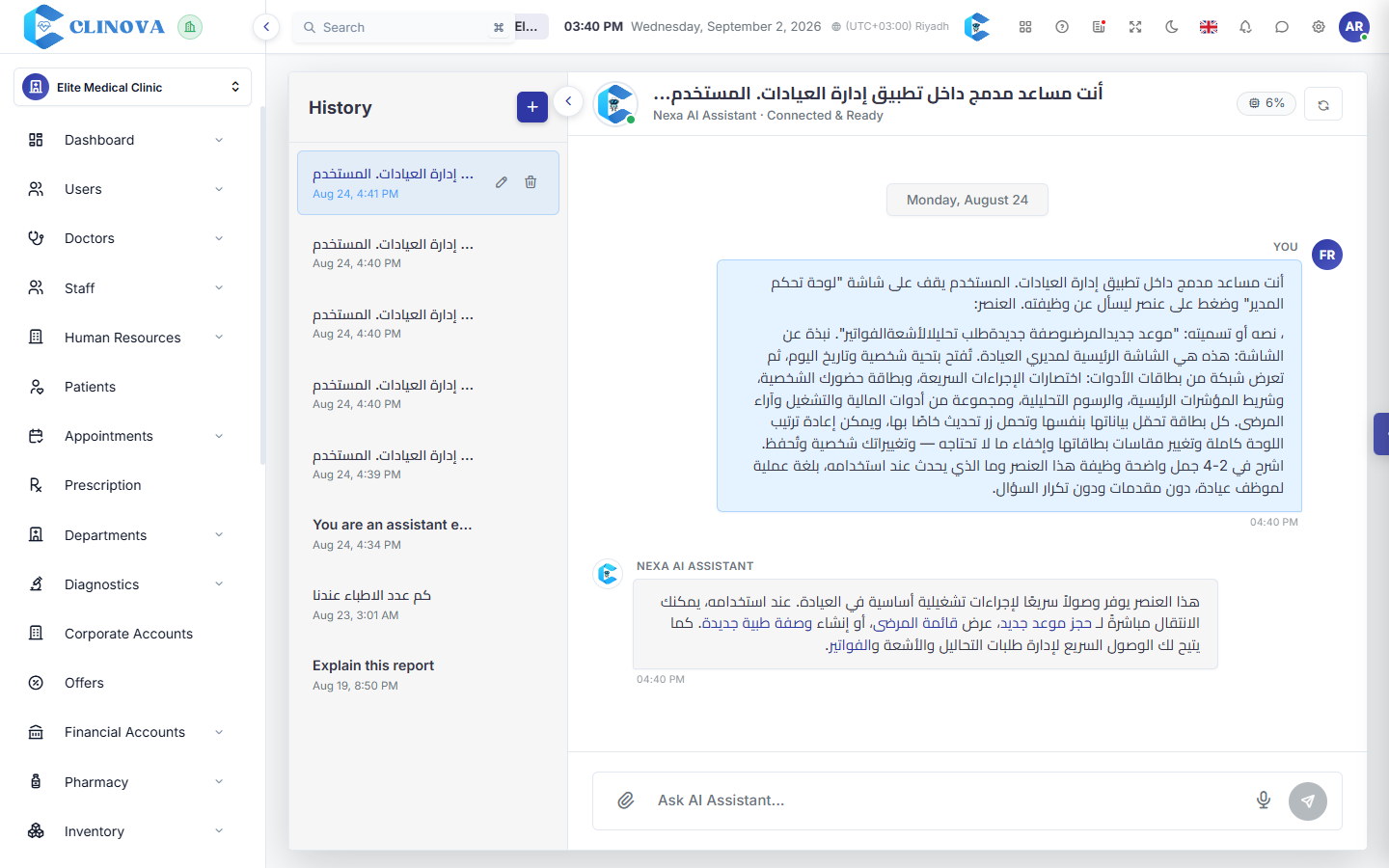
Know who won't show up — before they don't
No-shows are one of the quietest revenue leaks in any clinic. Clinova's no-show prediction looks at each upcoming appointment — booking history, past attendance, timing patterns — and flags the visits most at risk, so your front desk can confirm, remind, or rebook the slot before it goes empty.
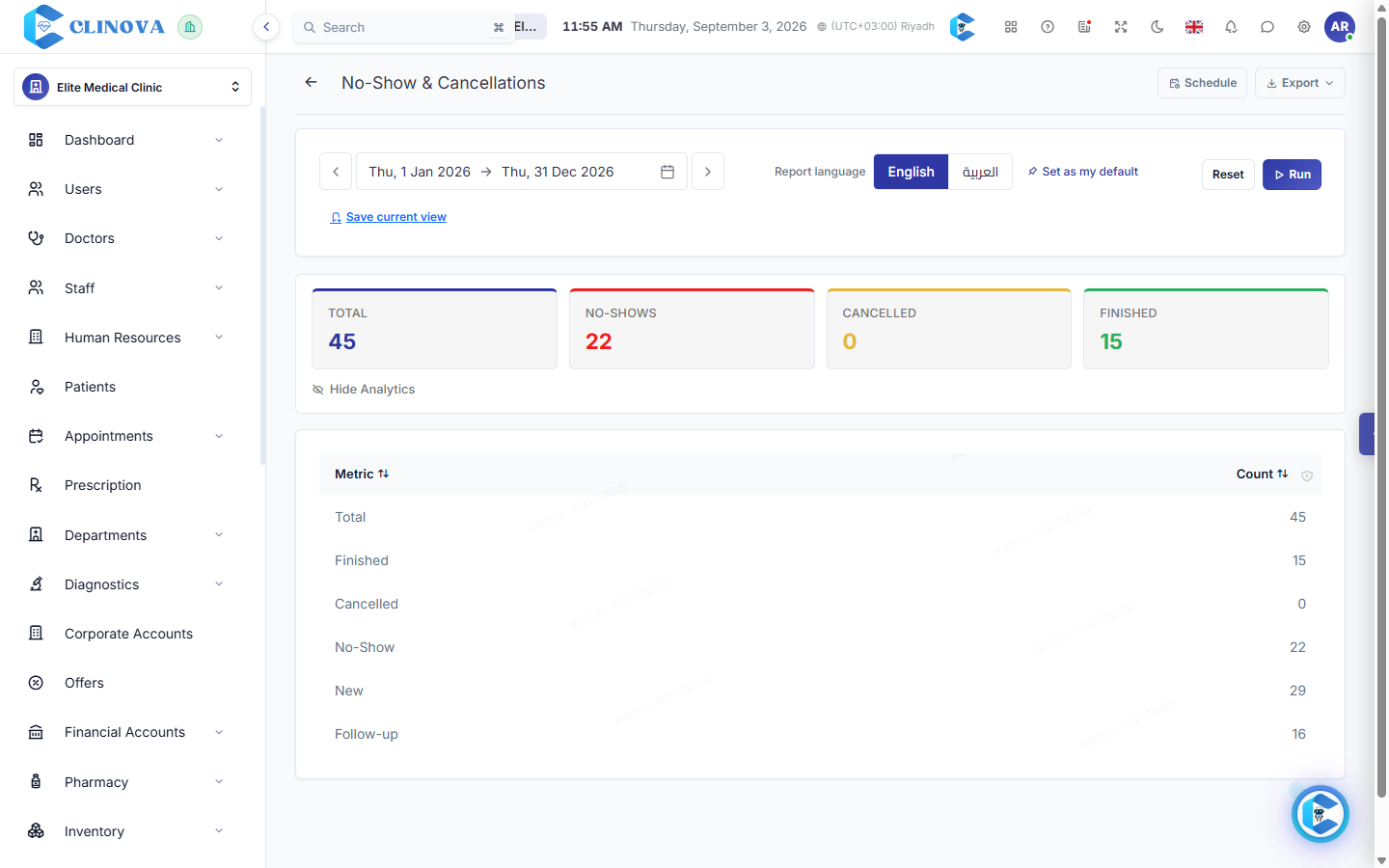
Insights that find money you're leaving on the table
The insights engine continuously scans your operations for patterns worth your attention: services that are underpriced compared to demand, hours where chairs sit empty, patients who are overdue for a follow-up. Instead of a static dashboard, you get a feed of specific, actionable observations.
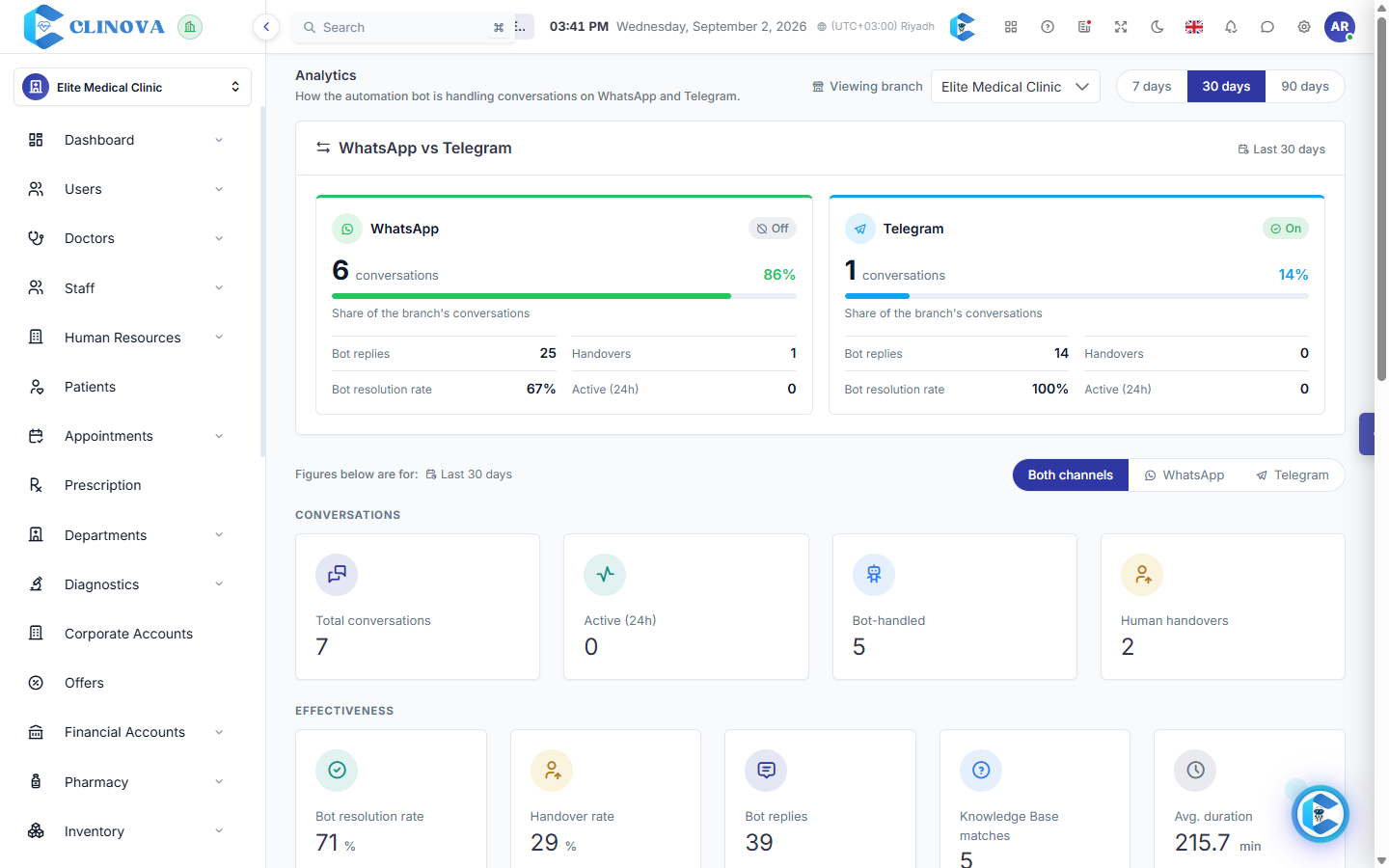
Most clinics only see what happened. Clinova tells you what's about to happen — and what to do about it.
Automations that do the follow-up for you
Insights are only useful if someone acts on them. With automations, routine actions run on their own: reminder sequences for at-risk appointments, recall messages for overdue patients, alerts when stock drops below a threshold. You define the rule once; Clinova executes it every day without being asked.
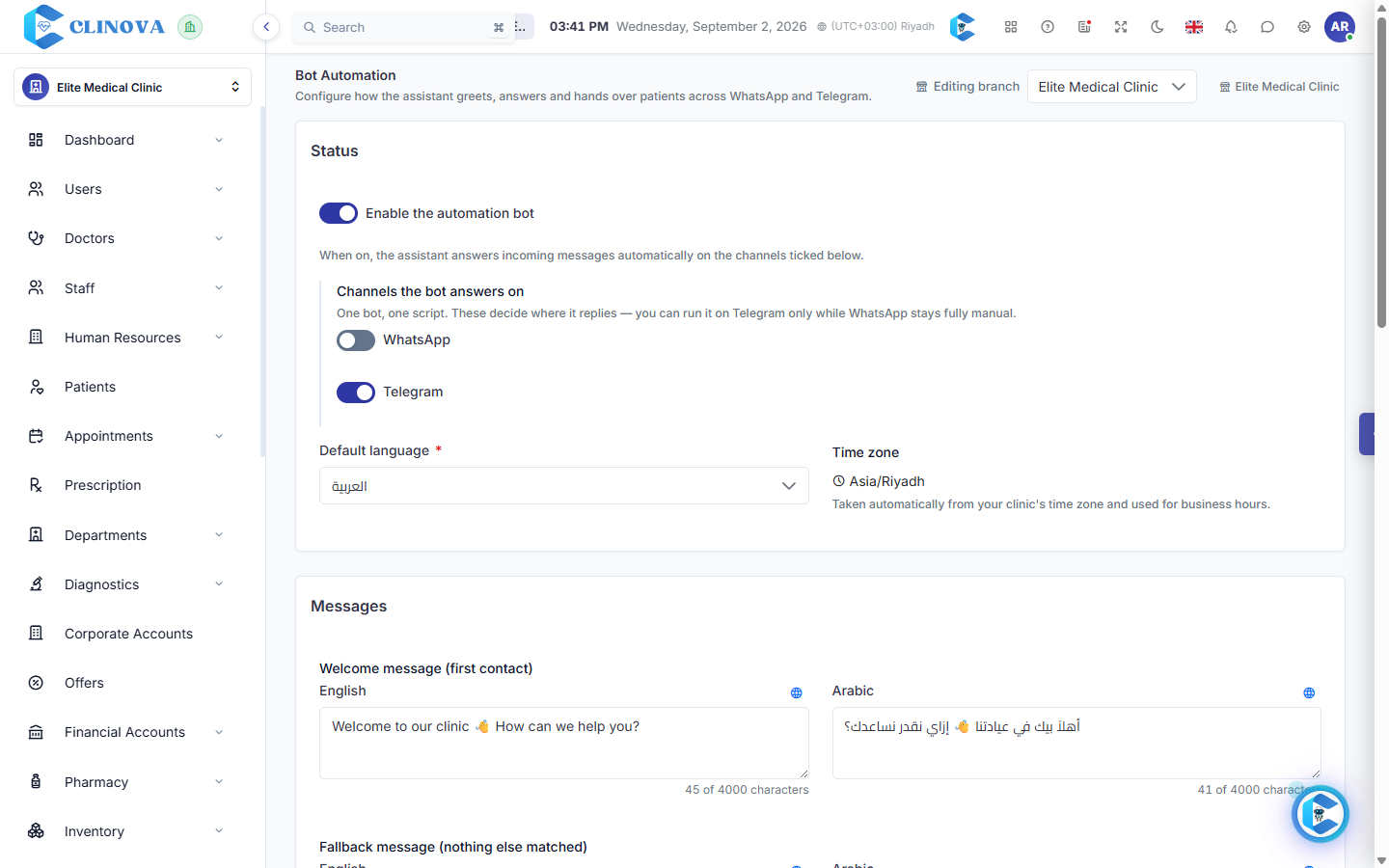
Nexa is included in Clinova plans with AI units, and every answer stays inside your clinic's own workspace — your data is never shared between tenants. Explore Clinova or start your free trial to see what your data has been trying to tell you.